After the Verdict: Why Willow’s Acquittal Ignites a Far More Dangerous War
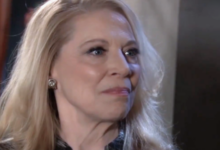
In General Hospital, a not-guilty verdict is rarely an ending. For Willow Tait, being cleared in court does not deliver freedom — it detonates a far more intimate and volatile battle over her future.
Legally, Willow walks out of the courtroom vindicated. Emotionally and strategically, she steps straight into a tug-of-war where every move made by those who claim to love her carries an agenda. The charges are gone, but the control struggle is only beginning.

Michael’s Next Phase: Control Without Looking Like Control
For Michael Corinthos, the verdict is not the win — it is the green light.
Michael no longer has to fight in public. With Willow cleared, he can now operate where he is strongest: quietly, methodically, and under the cover of “what’s best for the family.” His strategy will not involve ultimatums or confrontations. Instead, he will work to shape Willow’s options until the safest, most reasonable path always leads back to him.
Housing, stability, finances, the children, legal protections — Michael understands that whoever controls the infrastructure of Willow’s life controls the outcome. To outsiders, he will look supportive. To Willow, he will look indispensable. And that is precisely the point.



Drew’s Response: From Rescuer to Challenger

This is where Drew Cain becomes dangerous.
Drew will not retreat after the verdict. In fact, Willow’s acquittal strengthens his resolve. Unlike Michael, Drew believes the real injustice begins after the courtroom — when Willow is denied the space to choose her own future. His instinct is not to manage or contain her, but to pull her out of the gravitational pull of the Corinthos world altogether.
Drew’s next move is likely emotional rather than logistical. He will position himself as the one person who asks Willow what she wants — not what’s safest, smartest, or least disruptive. That makes him a direct threat to Michael, because choice is the one thing Michael cannot fully control.
Expect Drew to push for:
- physical and emotional distance from Michael
- decisions made away from Port Charles power structures
- a future defined by autonomy rather than protection
And unlike Michael, Drew is willing to say out loud that Willow deserves freedom — even if that freedom excludes him.
Why the Conflict Escalates Instead of Resolves
The tragedy is that both men believe they are acting out of love.
Michael equates love with stability and containment. Drew equates love with release and self-determination. Willow, caught between them, is not being asked to heal — she is being asked to choose sides before she has even caught her breath.
That is why the verdict feels explosive rather than triumphant. Justice may have spoken, but the people around Willow refuse to let the moment be neutral. Every gesture now doubles as a claim.
The Real Question Isn’t Who Wins — It’s When Willow Pushes Back
Willow’s acquittal removes the legal cage, but the emotional one remains firmly in place. The real turning point will not come from Michael tightening his grip or Drew escalating his challenge. It will come when Willow recognizes that both paths — safety and escape — are still choices being shaped for her.
Until then, the verdict stands as a cruel irony: not guilty, but not free.
